


Up to 80% of your immune system lives in your gut, yet millions of people unknowingly suffer from intestinal permeability—a condition where the protective lining of your digestive tract becomes compromised. When you learn how to heal leaky gut syndrome naturally, you’re not just addressing digestive symptoms; you’re rebuilding the foundation of your entire health.
Leaky gut syndrome occurs when the tight junctions in your intestinal wall loosen, allowing undigested food particles, toxins, and bacteria to escape into your bloodstream. This triggers widespread inflammation and can manifest as bloating, fatigue, skin issues, food sensitivities, and autoimmune conditions. The good news? Your body has remarkable healing capacity when given the right support.
Key Takeaways
- Leaky gut syndrome develops when intestinal tight junctions become damaged, allowing harmful substances into the bloodstream
- A structured elimination diet removing inflammatory foods is the foundation for healing intestinal permeability
- Specific supplements like L-glutamine, probiotics, and digestive enzymes accelerate gut lining repair
- Lifestyle factors including stress management and sleep quality directly impact gut barrier integrity
- Most people see significant improvement within 3-6 months following a comprehensive natural healing protocol
Understanding Leaky Gut Syndrome and Your Intestinal Barrier
Your intestinal lining consists of a single layer of cells connected by tight junctions—microscopic protein structures that control what passes from your gut into your bloodstream. Think of these tight junctions as selective gatekeepers that allow nutrients through while blocking harmful substances.
When these junctions become damaged through chronic stress, inflammatory foods, medications, infections, or toxins, your gut barrier becomes “leaky.” This intestinal permeability allows partially digested proteins, bacterial endotoxins, and other molecules to enter your bloodstream, triggering an immune response.

Common symptoms of leaky gut include:
- Chronic bloating and gas
- Food sensitivities that seem to multiply
- Persistent fatigue and brain fog
- Skin conditions like eczema or acne
- Joint pain and inflammation
- Autoimmune flare-ups
- Mood issues and anxiety
The connection between gut health and overall wellness runs deep. Research shows that intestinal permeability contributes to conditions ranging from irritable bowel syndrome to autoimmune diseases. Understanding this connection is the first step in how to heal leaky gut syndrome naturally.
Step 1: Remove Inflammatory Triggers from Your Diet
The foundation of any gut healing protocol starts with removing foods that damage your intestinal lining. This elimination phase typically lasts 4-6 weeks and gives your gut the break it needs to begin repair.
Foods to eliminate completely:
- Gluten-containing grains (wheat, barley, rye)
- Conventional dairy products
- Refined sugar and artificial sweeteners
- Processed vegetable oils (canola, soybean, corn)
- Alcohol and caffeine
- Processed foods with additives and preservatives
Many people also benefit from temporarily removing common allergens like eggs, soy, corn, and nightshade vegetables. If you struggle with symptoms of small intestinal bacterial overgrowth, you may need to limit fermentable carbohydrates during the initial healing phase.
Focus instead on:
- Organic vegetables (especially leafy greens)
- Wild-caught fish and grass-fed meats
- Healthy fats (avocado, olive oil, coconut oil)
- Low-sugar fruits (berries, green apples)
- Bone broth and collagen-rich foods
- Fermented vegetables (if tolerated)
This isn’t about restriction forever—it’s about creating the optimal environment for healing. Once your gut barrier strengthens, you can systematically reintroduce foods to identify your personal triggers.
Step 2: Repair Your Gut Lining with Targeted Supplements
While diet forms the foundation, specific supplements accelerate the healing process by providing concentrated nutrients that repair intestinal cells and restore barrier function. Understanding how to heal leaky gut syndrome naturally means strategically supporting your body’s repair mechanisms.
Essential gut-healing supplements:
L-Glutamine serves as the primary fuel source for intestinal cells. Take 5-10 grams daily on an empty stomach. This amino acid directly repairs damaged tight junctions and reduces intestinal permeability within weeks.
Collagen peptides provide the building blocks for tissue repair. Mix 10-20 grams into smoothies or warm beverages daily. Collagen contains specific amino acids like glycine and proline that strengthen the gut lining.
Zinc carnosate specifically heals tight junctions and reduces inflammation. Take 15-30 mg daily with food. Studies show zinc supplementation significantly improves intestinal barrier function.
Digestive enzymes taken with meals reduce the burden on your compromised digestive system. Look for broad-spectrum formulas containing protease, lipase, and amylase.
High-quality probiotics restore beneficial bacteria that support gut barrier integrity. Choose strains like Lactobacillus plantarum, Bifidobacterium lactis, and Saccharomyces boulardii. Start with 25-50 billion CFUs daily.
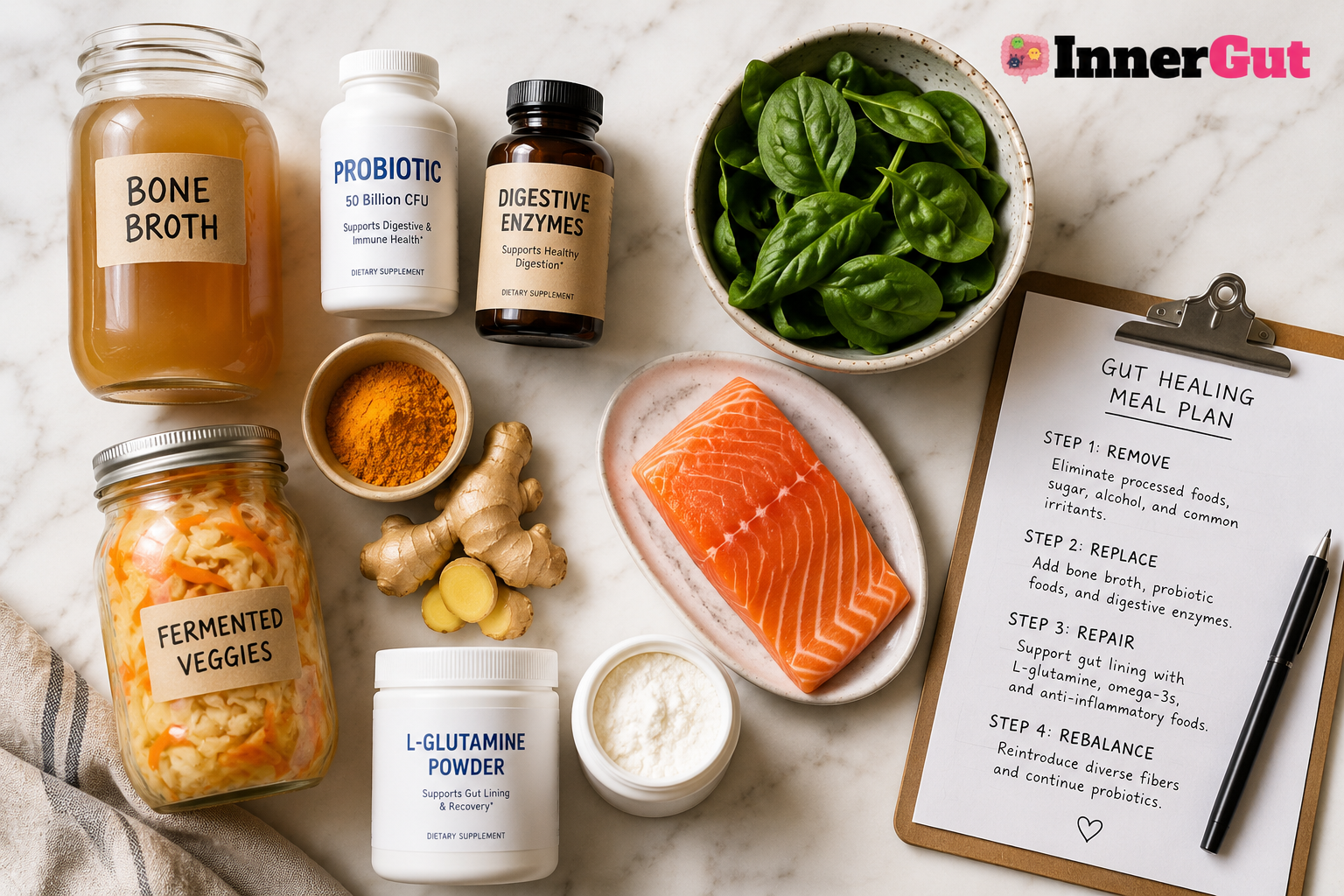
Omega-3 fatty acids from fish oil reduce intestinal inflammation. Take 2-3 grams daily of combined EPA and DHA. These essential fats modulate immune response and support cell membrane health.
Quercetin stabilizes mast cells and reduces histamine-related gut inflammation. Take 500-1000 mg twice daily between meals.
The gut healing diet for beginners combines these supplements with anti-inflammatory foods for maximum benefit. Consider working with a functional medicine practitioner to customize your supplement protocol based on your specific needs.
Step 3: Restore Beneficial Gut Bacteria
Your microbiome—the trillions of bacteria living in your digestive tract—plays a crucial role in maintaining gut barrier integrity. Beneficial bacteria produce short-chain fatty acids that feed intestinal cells and regulate immune function.
Strategies to rebuild your microbiome:
Consume fermented foods daily once your gut can tolerate them. Start with small amounts of sauerkraut, kimchi, or coconut yogurt. These foods provide diverse probiotic strains and beneficial enzymes.
Include prebiotic fibers that feed good bacteria. Foods like oats (if tolerated), Jerusalem artichokes, garlic, onions, and asparagus nourish beneficial microbes. Start slowly to avoid gas and bloating.
Rotate probiotic supplements every 2-3 months to introduce bacterial diversity. Different strains offer different benefits—some reduce inflammation while others strengthen barrier function.
Avoid unnecessary antibiotics that destroy beneficial bacteria along with harmful ones. If antibiotics are medically necessary, take high-dose probiotics (100+ billion CFUs) during and after treatment.
Consider soil-based probiotics containing Bacillus species. These hardy organisms survive stomach acid and support immune regulation differently than traditional Lactobacillus strains.
Step 4: Address Lifestyle Factors That Impact Gut Health
Diet and supplements alone won’t heal leaky gut if lifestyle factors continue damaging your intestinal barrier. Stress, poor sleep, and environmental toxins all compromise gut integrity.
Stress management is non-negotiable. Chronic stress increases intestinal permeability through the gut-brain axis. The stress hormone cortisol directly weakens tight junctions. Practice daily stress reduction through meditation, deep breathing, yoga, or time in nature.
Prioritize 7-9 hours of quality sleep. Your gut lining repairs itself during deep sleep. Poor sleep disrupts this process and increases inflammation. Establish a consistent sleep schedule and create a dark, cool sleeping environment.
Exercise moderately but don’t overtrain. Gentle movement like walking, swimming, or yoga supports gut health. However, intense exercise without adequate recovery can increase intestinal permeability. Listen to your body.
Minimize toxin exposure. Switch to natural cleaning products, filter your water, choose organic produce when possible, and avoid unnecessary medications. Toxins burden your liver and damage gut bacteria.
Manage constipation naturally. Regular bowel movements prevent bacterial overgrowth and toxin reabsorption. If you struggle with elimination, try natural methods to support regularity like magnesium, vitamin C, or gentle herbal support.
Stay hydrated. Water supports mucus production that protects your intestinal lining. Aim for half your body weight in ounces daily, adjusting for activity level and climate.
Step 5: Test, Track, and Adjust Your Protocol
Healing leaky gut naturally requires patience and personalization. What works for one person may need adjustment for another based on individual triggers, microbiome composition, and underlying conditions.
Track your symptoms weekly. Rate digestive symptoms, energy levels, skin condition, and mood on a scale of 1-10. This objective data helps you identify what’s working and what needs adjustment.
Consider functional testing. Tests like zonulin levels, lactulose-mannitol testing, or comprehensive stool analysis provide objective markers of gut barrier function and microbiome health. Retest after 3-6 months to measure progress.
Reintroduce foods systematically. After 4-6 weeks of strict elimination, begin reintroducing one food every 3-4 days. Start with less inflammatory options like properly prepared low FODMAP bread or fermented dairy. Note any reactions.
Adjust supplement dosages. As your gut heals, you may need less support. Conversely, if progress stalls, you might need to increase certain supplements or add new ones like butyrate or immunoglobulins.
Address underlying infections. If you’re not improving after 2-3 months, consider testing for parasites, candida overgrowth, or SIBO. These conditions prevent healing and require specific treatment protocols.
Focus: Eliminate inflammatory foods, begin supplement protocol
Focus: Intensive gut lining repair, microbiome restoration
Focus: Systematic food reintroduction, identify triggers
Focus: Long-term maintenance, lifestyle optimization
How Long Does It Take to Heal Leaky Gut Naturally?
Most people ask this question early in their healing journey. The honest answer: it depends on the severity of damage, underlying causes, and how consistently you follow the protocol.
Typical healing timeline:
- Weeks 1-4: Initial inflammation reduction, some symptom relief
- Weeks 5-12: Significant improvement in digestive symptoms, energy increases
- Weeks 13-24: Gut barrier substantially healed, food tolerances expand
- Months 6-12: Full restoration for most people, maintenance phase begins
Some people experience dramatic improvement within weeks, while others with severe damage or multiple underlying issues may need 12-18 months. Factors that slow healing include ongoing stress, undiagnosed infections, continued toxin exposure, or autoimmune conditions.
The key is consistency. Following the protocol 80% of the time won’t produce 80% of the results—it may produce minimal results. Your gut needs sustained support to rebuild properly.
Supporting Your Healing Journey with Innergut Resources
Healing leaky gut syndrome naturally requires commitment, but you don’t have to navigate this journey alone. The comprehensive approach outlined here addresses the root causes of intestinal permeability rather than just masking symptoms.
Remember that healing isn’t linear. You may experience setbacks or plateaus. This is normal. Your body is doing complex repair work at the cellular level. Trust the process and adjust as needed based on your individual response.
If you’re dealing with related digestive issues like loose bowel movements after eating or immediate diarrhea after meals, these often improve as your gut barrier heals. Many digestive symptoms share leaky gut as an underlying cause.
Consider exploring natural detox methods to support your body’s elimination pathways during healing. Gentle detoxification reduces the toxic burden on your gut and liver.
Conclusion
Learning how to heal leaky gut syndrome naturally empowers you to address the root cause of numerous health issues rather than simply managing symptoms. By systematically removing inflammatory triggers, repairing your intestinal lining with targeted nutrition and supplements, restoring beneficial bacteria, and addressing lifestyle factors, you create the optimal environment for healing.
The five-step protocol outlined here—remove, repair, restore, rebalance, and maintain—provides a comprehensive roadmap for rebuilding your gut barrier. Start with the elimination diet and core supplements, then layer in additional strategies based on your individual needs and response.
Your next steps are clear: eliminate inflammatory foods this week, order quality L-glutamine and probiotics, and commit to tracking your symptoms. Most importantly, be patient with yourself. Your gut didn’t become leaky overnight, and it won’t heal overnight either. But with consistent effort and the right support, you can restore your intestinal barrier and reclaim your health from the inside out.
For more guidance on supporting your digestive health, explore the gut health resources available at InnerGut.com.

