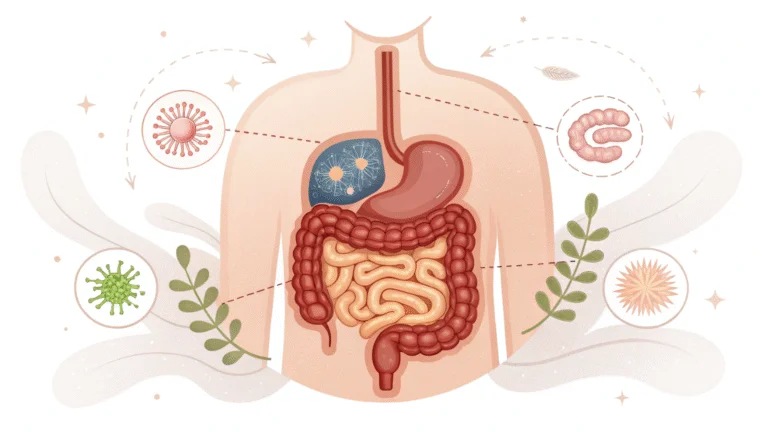

If you’ve been struggling with bloating, irregular bowel habits, or stomach discomfort, you’re not alone. Many people face common digestive conditions long before they realize what’s really going on inside their gut. I’ve been there myself—ignoring mild symptoms, blaming stress or food choices, and hoping everything would magically improve. The reality is these digestive issues don’t just disappear; they escalate if left unchecked. Understanding common digestive conditions is the first step toward taking control, reducing discomfort, and reclaiming your energy. In this guide, I’ll break down the most frequent digestive disorders, how to recognize them, and practical ways to manage them effectively.
Sound familiar?
Here’s the part nobody tells you: most digestive issues don’t show up overnight. They creep in slowly. They whisper before they shout. But once you understand what’s going on, you finally feel like you have some control again.
This guide breaks down the most common digestive conditions in a way that makes sense, feels doable, and gives you back the confidence you deserve. Because once you know what’s happening in your body, everything changes.
And yes—if I could figure this out after years of ignoring the signs, you absolutely can too.
Let’s dive in.
A Quick Breakdown Before We Begin
• Most digestive conditions share similar early symptoms, which is why people often misdiagnose themselves.
• You don’t need a medical degree to understand what’s going on in your gut.
• Small, consistent changes beat extreme diets every time.
• Your symptoms aren’t “in your head”—your gut is talking to you.
Understanding Common Digestive Conditions and How the Gut Breaks Down
• The gut controls more than digestion; it affects mood, energy levels, inflammation, and even immunity.
• 70% of your immune system lives in your digestive tract.
• When the gut microbiome becomes unbalanced, symptoms spread everywhere.
• Chronic stress is one of the biggest contributors to gut dysfunction.
If you want a deeper breakdown of how your gut microbiome affects everything from immunity to metabolism, Harvard Health has a helpful overview you can check out here
Here’s the truth:
Most digestive issues start long before the symptoms feel “serious.”
Maybe you’ve noticed bloating that comes and goes. Maybe you feel tired after eating. Maybe spicy foods suddenly hit you differently. These are early signs that your gut is waving a red flag.
Your digestive system is trying to get your attention.
Ready to understand what might actually be going on?
The 7 Most Common Digestive Conditions You Need to Know
1. Acid Reflux and GERD as Common Digestive Conditions
• About 20% of adults in the U.S. deal with GERD regularly.
• Reflux isn’t just heartburn; it can show up as coughing, throat tightness, or a sour taste.
• Trigger foods vary from person to person, but high-fat meals are the biggest culprit.
Acid reflux happens when stomach acid moves upward. And trust me—you don’t need “severe” symptoms for it to be a problem. I used to brush off my mild burning as “I ate too fast.” Turns out it was early GERD.
If you find yourself sleeping propped up, avoiding tomato sauce, or popping antacids like mints, something deeper is going on.
But the good news? Small changes in how you eat (not just what you eat) can calm things down faster than you’d think.
2. IBS: One of the Most Overlooked Digestive Disorders
• IBS affects around 10–15% of adults.
• It’s one of the most underdiagnosed conditions because symptoms look like “normal stomach issues.”
• Stress plays a much bigger role than most people realize.
If there’s one condition that hides in plain sight, it’s IBS. You can have diarrhea one week, constipation the next, and bloating that makes you look six months pregnant. IBS can make you feel unpredictable.
Here’s the part that surprised me:
Your gut and brain are in constant communication. If your stress levels spike, IBS symptoms usually follow.
IBS isn’t about perfection—it’s about learning what your triggers are and working with your gut instead of fighting against it.
3. Lactose Intolerance as a Digestive Issue
• 65% of people worldwide struggle with digesting dairy.
• Symptoms can appear suddenly, even if you ate dairy your whole life.
• Many people confuse lactose intolerance with IBS.
If ice cream sends you into a spiral of bloating, gas, or bathroom emergencies, you’re not imagining things. Your body may not be breaking down lactose properly.
The tricky part? Many “healthy foods” contain hidden dairy—protein bars, salad dressings, even some breads.
The upside:
Lactose intolerance is one of the easiest digestive issues to manage once you know what to avoid.
4. Celiac Disease and Its Impact on Digestive Health
• Only about 1% of people have celiac, but most go undiagnosed for years.
• It’s an autoimmune disease—not a food sensitivity.
• Even small amounts of gluten can damage the small intestine.
This one is serious. Celiac isn’t the same as being “gluten sensitive.” It’s a condition where your immune system attacks your own body when gluten is present.
If you’ve been dealing with unexplained fatigue, nutrient deficiencies, or chronic stomach pain, this is worth exploring with a professional.
Celiac requires a complete lifestyle shift—but once you get the hang of it, most people see massive improvements in energy and digestion.
5. Gallbladder Problems as Digestive Disorders
• Gallbladder problems often show up after fatty meals.
• Pain usually appears on the right side under the ribs.
• Women experience gallbladder issues more frequently than men.
Your gallbladder stores bile, which helps break down fats. When something goes wrong—stones, inflammation, sluggish bile—you feel it.
The pain can be sharp, sudden, and honestly, a little scary. Many people don’t realize gallbladder issues can lead to nausea and heavy bloating too.
If you’re sensitive to fried foods or feel pressure under your ribs after eating, your gallbladder may be working overtime.
6. Inflammatory Bowel Disease: Serious Digestive Conditions
• First, these are inflammatory bowel diseases (IBD), not to be confused with IBS.
• Additionally, symptoms can include weight loss, severe pain, and bloody stools.
• Importantly, early diagnosis makes a huge difference.
IBD is serious and deserves proper medical support. That said, here’s what I want you to remember: people live full, thriving lives with it.
When your symptoms become severe or disrupt daily life, it’s crucial not to ignore them. After all, your body is giving you clear signals—and listening early can make all the difference.
7. SIBO: A Hidden Digestive Condition Many People Miss
• For example, think bloating, constant fullness, and random food intolerances.
• In fact, SIBO is often misdiagnosed as IBS.
• Therefore, proper testing is required to confirm it.
SIBO happens when bacteria that normally belong in the large intestine move into the small intestine. As a result, this leads to fermentation, bloating, and nutrient absorption issues.
So, if you feel bloated no matter what you eat, SIBO could be the hidden culprit—and recognizing it early makes a huge difference.
How Common Digestive Conditions Develop Over Time
Most digestive disorders begin with chronic inflammation or microbiome imbalance. In addition, food quality, stress, sleep, and movement all play a role. While genetics matter, lifestyle tends to trigger symptoms. Importantly, early intervention prevents long-term damage.
Let me be real: I used to treat my stomach like it was invincible. I’d skip meals, eat late, rely on fast food, and expect my gut to just “deal with it.”
Spoiler alert: it didn’t.
As a result, by the time symptoms showed up, the damage had been slowly building for years. This is often how digestive issues develop—they rarely show up overnight.
However, you don’t need to overhaul your entire life to get relief. Instead, you just need a clear strategy.
How to Improve Gut Health and Reduce Digestive Issues
• Start by identifying patterns instead of guessing.
• Adjusting meal timing alone can reduce symptoms by 30% or more.
• You don’t need supplements to fix your gut, but they can help.
• Consistency beats intensity every time.
I get it—you want to feel better as fast as possible. But here’s the truth: your gut needs steady support, not drastic changes.
Start with these:
1. Eat Slower to Reduce Digestive Issues
Digestion starts in the mouth. Chewing well reduces digestive workload dramatically.
2. Light Movement After Meals to Support Gut Health
A 10-minute walk can prevent reflux, bloating, and sluggish digestion.
3. dentify Food Triggers Linked to Digestive Problems
Common examples:
• Fried foods
• Spicy meals
• Chocolate
• Alcohol
• Coffee
4. Reduce Stress to Improve Digestive Health
Deep breathing
Morning routine
Short breaks
Better sleep patterns
Your gut responds directly to your nervous system.
5. Don’t Ignore Recurring Symptoms of Digestive Conditions
Your body whispers before it screams. Listen early.
When Digestive Conditions Require Professional Help
• • First, symptoms lasting longer than 3 months shouldn’t be ignored.
• Additionally, unexplained weight loss is a major red flag.
• Moreover, blood in stools always requires evaluation.
• Importantly, a diagnosis gives you power, not limitations.
Remember, you don’t have to “tough it out.” In fact, getting answers is one of the most freeing moments in a health journey.
Therefore, if something feels off, trust that feeling and take action early.
Encouragement for People Facing Digestive Conditions
Look, I know digestive issues can feel isolating. At the same time, you might wonder why your body seems to be working against you. In fact, you may even feel frustrated that things you used to eat without thinking now give you problems.
However, here’s the reality:
Your gut is resilient. Over time, it learns. Then, it adapts. Finally, it heals when you give it the chance.
So, if you’ve been struggling, you are not broken. You’re human. Essentially, your body is asking for a bit of attention—not perfection.
And the good news is: Remember, you’ve got this. Moreover, if I could turn my gut health around after years of ignoring the signs, you can absolutely do the same.